Tuesday, 3 May 2022

Oh, Shenandoah


If you’d asked me at any time up to the end of March where I would be spending Easter this year, a cabin on the banks of the Shenandoah River would have been the last place I’d have guessed. True, I knew we would be in the USA, but I had no idea of being anywhere except in Maryland. Shenandoah – the River, the Valley and the National Park – were simply not on my horizon.  But there we were: in a cabin at the far end of Bumgardener’s Ford Road (an attempted anglicising of Baumgartner, one hopes), a gritty track off a road passing through Rileyville, Virginia. This cabin was built, like its neighbours, on stilts in anticipation of flood levels overtopping the steep banks at the bottom of our garden. From a rocking chair on the cabin’s wrap-around porch, I had a good view of the river: fifty yards across, and not too fast-flowing for an occasional canoe, picked out by the sun, to make steady progress upstream despite occasional rapids.  I could just make out a small child watching her father fishing. 

In the distance beyond the river – at this point, the south fork of the Shenandoah – loomed the George Washington National Forest; behind us, the Blue Ridge Mountains and Shenandoah National Park. It was all new and strange to me, but this was one of those rare places, and rare moments, where I felt at once and unexpectedly at home and happy – and knew this to be so. I remembered Auden: ‘Moments of happiness do not come often’; I remembered, too, an autumn afternoon at school in 1965, when my teacher asked me to tease out these lines from TS Eliot’s Four Quartets:

For most of us, there is only the unattended 

Moment, the moment in and out of time,

The distraction fit, lost in a shaft of sunlight …


 I remembered, moreover, the moment I first became aware of Shenandoah: Boxing Day, 1957. I was eight years old; every year we went to stay with my uncle and aunt for a family Christmas party. It was always a musical occasion; my cousins were promising musicians and expected to perform, which they duly did – on flute, recorder, piano. After supper we all sang carols before my brother and I were packed off to bed. I was disappointed, because my uncle had recently invested in something I had never seen before, a radiogram. Our home boasted only a wheezing harmonium and a wind-up gramophone for which there were just three 78rpm records: ‘Blow the Wind Southerly’ (Kathleen Ferrier), ‘The Wings of a Dove’ (Ernest Lough) and ‘The Song of The Volga Boatmen’ by goodness knows whom. Now my cousins were going to demonstrate the radiogram’s potential by playing some of their new records – Christmas presents, no doubt. I longed to be able to stay and listen.

As it happens, I was able to listen - after a fashion. My uncle’s house was a bungalow, but with one narrow room upstairs – a loft conversion – and this is where we used to sleep. As I lay in bed I could at least hear snatches of music below, wafting up through the floorboards. What I heard was ‘Shenandoah’. I had never known singing like this: a folk song, part African-American (in those days simply ‘negro’) spiritual, part slow-motion sea-shanty.  The recording my cousins were playing was by Harry Belafonte, who gave to the song a tone of infinite sadness and yearning I had never heard before and have never forgotten. The opening words, as Belafonte sang them, came out like a huge sigh:


Oh, Shenandoah,

I long to hear you,

Away, you rolling river ….


Insofar as I understood the words at all, the song was a lament for a river the singer – flatboatman?, tea-clipper sailor? trapper? - loved but might never see again (‘Away I’m bound to go’). And for me, from then until I found myself last month sitting on its very banks, this had only ever been a river of the imagination, one with perhaps the same sort of significance as the river Jordan in ‘Swing Low, Sweet Chariot’:


I looked over Jordan and what did I see,

Coming for to carry me home?

I saw a band of angels coming after me

Coming for to carry me home.


Now, however, I realise that ‘Shenandoah’, the song, has an almost infinite number of variations on its original lyrics – whatever those may have been.  (It is not least of the charms of oral literature, whether Beowulf or one of the border ballads from Percy’s Reliques, that by definition it is impossible to know who the original composer was or to be sure when it was composed.) It seems likely that the earliest singers of this song were early 19th century voyageurs, fur traders who had made their way by canoe as far as the wide Missouri, and that ‘Shenandoah’ referred not to the eponymous river but to a native American chieftain of that name (Skenandoa) whose daughter a trader wanted to marry. Whether he succeeded depends on whose version of the song you now listen to:  Bob Dylan for instance calls the daughter Sally, but leaves it unclear whether the fur trader has (a) abandoned Shenandoah’s daughter – ‘Away I’m bound to go’ (b) married her with her father’s reluctant approval or (c) paddled off with her anyway into the sunset.


I have always loved rivers and their river banks – the Nene from Sutton Bridge to the Wash, the Weir at Durham, the Ouse at Bedford, and now the Shenandoah river too. Since Easter, I have been listening (thanks to YouTube) to many singers singing ‘Shenanadoah’.  Bob Dylan’s recording, I’m afraid, is not even plaintive; of his contemporaries, Tom Paxton’s pleases me most. The least expected, but not least successful, setting – for orchestra, soloist and choir – is Percy Grainger’s.  But, even now, none can compare with the version I first heard, in my uncle’s house, on Boxing Day 1957: that by Harry Belafonte.


 Adrian Barlow


Note: I have written before about these quotations from Auden (in The Ascent of F6) and Eliot (from ‘The Dry Salvages’) in William Blake and Eternity’s Sunrise.

Illustrations: (i) and (ii) The Shenandoah River (South Fork) Easter 2022; (iii) The cover of the 1957 Harry Belafonte LP containing the first recording of ‘Shenandoah’ I  ever heard.

Wednesday, 11 August 2021

To Norfolk (again)

‘I grow old … I grow old … I shall wear the bottoms of my trousers rolled’: thus TS Eliot’s Prufrock, and I know how he felt. These days, seaside holidays provoke in me two contrasting emotions: nostalgic indulgence in old memories (mostly of Sidmouth in early youth) tempered by the graceful acceptance that as a grandparent my role now is to sit quietly on the beach unless required (a) to assist with making sandcastles, (b) to admire the sandcastles made without any help from you, grandpa, (c) to act as lifeguard when paddling occurs, (d) to be on hand to buy ice-creams, fish & chips or crab sandwiches when time and circumstance  demand.

 Philip Larkin sums all this up perfectly with his account of ‘the miniature gaiety of seasides’, in ‘To the Sea’1. I believe this was the second Larkin poem, after ‘Church-Going’, I ever read and I’m still struck by the evident pleasure he took in returning to one of the few scenes of his childhood remembered with evident affection. 


It’s entirely appropriate that John Sutherland’s recent biographical memoir, Monica Jones, Philip Larkin and Me: Her Life and Long Loves (2021) should have on its front cover a photo of Larkin and Monica enjoying (or not?) a morning on the rocks, probably at Sark in the Channel Islands, where they used to go for what was ‘half an annual pleasure, half a rite’. He stands staring out to sea, wearing a Harris tweed sports jacket and grey flannels. Monica, looking like Catherine Deneuve on a bad day, sprawls on the ground with her back to him, reading the Daily Telegraph through dark glasses. I wonder who was with them to take the photograph?

 We have just spent a week in Norfolk.2 We weren’t exactly beside the seaside, for we stayed in a holiday cottage on the Norfolk Broads, a few miles inland. It was a remote spot deep in Britain’s smallest National Park: a straggle of old cottages, some newer bungalows and clusters of thatched or pantiled farm buildings, barns in particular. The local thatcher had been kept busy: I’ve never seen more skilful thatching, and signs of his recent handiwork were everywhere.


A quarter of a mile beyond our cottage a signpost pointed to How Hill, apparently the highest point on the Broads. Our evening walk took us this way towards How Hill Nature Reserve, a good viewpoint for spotting windmills. I have never seen more windmills in one landscape – not even in the Fens, where I grew up. Nor have I ever seen anything odder than the early 18th century windmill tower at St. Benet’s Abbey, built into the ruins of the 15th century Abbey gatehouse. I can only describe this as an architectural palimpsest. At first, I thought it a demonstration of lingering protestant contempt for pre-Reformation Catholic Britain, but an interpretation panel nearby reassured me that the site was chosen so that the windmill could rest on the firm foundations of the Gothic gatehouse. 


We had approached St Benet’s by a boat hired at Potter Heigham. It must have been the slowest boat on the Broads, since everyone else overtook us. But speed isn’t the point when one is simply messing about on the river. I’d hoped to catch sight of a wherry or barge being quanted (a quant is a larger, heavier form of punt pole – a barge pole in fact) but I fear the practice must have died out. What I did see, however, was a small child assisting her father as he sat fishing from the riverbank; at his command, she would fire from an angler’s catapult a salvo of oddly-coloured maggots aimed approximately towards the water. These pink creatures, caught by the sunlight while in full flight, exactly matched the colour of the child’s baseball cap; nothing, however, could match the glint of sheer fun in her eyes. Why did I suddenly think of Minnie the Minx?


But going to the beach was what our week in Norfolk was all about. Cromer was crowded, though at least we saw the celebrated Cromer goats – well-horned black and white Bagots – munching away at the grass and gorse on the cliffs. According to North Norfolk District Council, these goats ‘carry out an important habitat management role’ – an unexpected way of describing what comes naturally to goats.


Gorleston Beach was wonderfully sandy, and stretched for miles, so far in fact that when I had eventually found an ice cream kiosk and returned, clutching a handful of rapidly disappearing ice creams, my clothes were streaked with dismal evidence of melted mint choc chip. The midday sun was indeed so strong that I had also purchased a navy baseball cap that I would have called discreet but for the words NORFOLK BROADS emblazoned on the peak.


Sheringham, a place for which I have great affection, offers everything a serious seaside family can ask for. And more. Where else in the world can you visit public loos where all the windows are filled with high-quality Edwardian stained glass: galleons and sailing smacks in the upper lights, fish and seaweed in semi abstract style below? Uplifting seems an odd word to apply to Council-controlled conveniences, yet it fits these perfectly, the windows carrying out an important facilities enhancement role.  Vaughan Williams used to stay nearby and wrote his great Sea Symphony at Sheringham. I hope he’d have agreed with my choice of epithet: he was a master of uplift.


But the tide is on the turn and it’s time to leave the beach. By tomorrow we’ll have packed up and set off for home, heading westwards after a week we shall all remember, wondering (but only to ourselves) whether, when and where we shall have such a seaside holiday again. Let Larkin have the last word:


It may be that through habit these do best

Coming to the water clumsily undressed

Yearly; teaching their children by a sort 

Of clowning. Helping the old, too, as they ought.


© Adrian Barlow 

Footnotes:

1.     All Philip Larkin quotations are from ‘To the Sea’, in High Windows (1974, London: Faber & Faber)
2.     This is the second time I have written about Norfolk (hence the title, To Norfolk, Again). You can read the earlier account, To Norfolk (January 2012), here.
 
Illustrations:
Fig.1: St Benet’s Abbey on the River Bure: interior view of windmill and gatehouse arch.
Fig.2: Front cover of John Sutherland: Monica Jones, Philip Larkin and Me (2021: London:Weidenfeld & Nicolson).
Fig. 3: Stained Glass windows in Gents’ Public Convenience, Sheringham, Norfolk.
(All illustrations copyright the author.)

Friday, 30 April 2021

On the Isle of Portland, with Thomas Hardy

When Lockdown lifted and travelling became possible, we escaped for a few days to a small island neither of us had visited before. This was the Isle of Portland, lying off the Dorset coast and attached to the mainland only by that great tombolo of shingle, Chesil Beach. I took with me Thomas Hardy’s last novel. I’m glad I did.


If you had asked me a month ago which of his novels Hardy had set partly in London but mainly on an island he described at different times as ‘the Isle of Slingers’, ‘this island of treeless rock’, ‘the oolitic isle’ and ‘the peninsula carved by time’, I’ll admit I wouldn’t have known. It’s The Well-Beloved and even now I’m not sure how it should be pronounced – ‘Beloved’ in two syllables, rhyming with that absurd modern euphemism for ‘secondhand’, pre-loved? or three, as in ‘Dearly Belov-ed’?


It’s a strange book. Originally serialised in the Illustrated London News in 1892 as The Pursuit of the Well-Beloved, Hardy revised and republished it as a single volume with its shorter title in 1897. At 150 pages it is hardly a full-length novel; more like a novella divided into three sections: ‘A Young Man of Twenty’, ‘A Young Man of Forty’ and ‘A Young Man of Sixty’. The young man is Jocelyn Pierston, a promising sculptor who pursues his image of ideal beauty and ideal womanhood from one woman to another. 


It’s a tale (on one level at least) of frustration and frequent disillusion. I found Pierston’s progress as voyeur, pursuer, predator even, makes uncomfortable reading, but the story is ostensibly presented by Hardy as a Victorian version of the Pygmalion myth, in which the sculptor is more in love with his own fantasy of an ideal woman than with its reality. The reality is represented by three generations of young women – mother, daughter and granddaughter – all called Avice Caro. Things don’t end happily for any of them, nor for Pierston himself. Between the sculptor and the third Avice there is an age difference of almost forty years. Hardy himself was thirty nine years older than his second wife, Florence Emily Dugdale.


Hardy knew the Isle of Portland well. History and topography matter in The Well-Beloved, as do landmarks and locations. Most of these are precisely situated and instantly recognizable. We were staying in an old quarryman’s cottage at the end of a lane that began by the Portland Museum, opposite the gatehouse to Pennsylvania Castle. Before this neat little house became a museum, it was previously known – on the strength of Hardy’s story – as Avice Caro’s Cottage. Beyond our Airbnb, the lane became a path winding under the arch of Rufus Castle, down to the coastal path and the steep steps leading to Church Ope Cove. This lane and these places, renamed Red King’s Castle and Hope Cove, loom large in The Well-Beloved. Even our holiday cottage gets a mention.


Upstairs I found a framed Indenture dating from 1802, transferring the freehold of the cottage between two brothers, Bernard and John Stone; the witness to this transfer, transacted ‘according to ancient custom time out of mind’ in the parish church, was Henry Pearce. Originally, in The Pursuit of The Well-Beloved, Hardy had spelt Jocelyn’s surname Pearston. 


Portland only gets one mention in Claire Tomalin’s 2007 biography, Thomas Hardy: The Time-Torn Man. Hardy and Florence visited the Isle in 1923 and ‘had themselves driven to Portland Bill to visit a new friend, Marie Stopes, who had settled in a lighthouse tower there’. (p.350) I’m pleased Tomalin adds that Hardy’s host for the day found him ‘boyish and twinkling […] eager to climb to the top of her tower and out onto the roof to see the circular view.’ Hardy had a head for heights,* his novels containing several memorable and sometimes visionary descriptions of landscapes and places seen – and heard – as if from on high and afar. One night the ‘young man of forty’ goes out in pursuit of Avice and from the highest point of the Isle takes in 


…the stars above and around him, the lighthouse on duty at the distant point, the lightship winking from the sandbank, the combing of the pebble beach by the tide beneath, the church away south-westward, where the island fathers lay‡ [….] He seemed to hear on the upper wind the stones of the slingers whizzing past, and the voices of the invaders who annihilated them, and married their wives and daughters, and produced Avice as the ultimate flower of the combined stocks. (p.77)


Tradition has it that when the Romans first invaded the island, they were assailed by stones hurled from the slings of the natives. Even in the mid 19th century – Hardy’s story begins in the 1840s – those who came over to the island from mainland Wessex were considered ‘kimberlins’ (foreigners) who threatened the islanders’ ancient customs and practices. But Hardy, though a kimberlin himself, loved this island ‘standing out so far into mid-sea that touches of the Gulf Stream soften the air till February’. In his Preface to the 1912 Wessex edition of The Well-Beloved he confessed it was ‘a matter of surprise that the place has not been more frequently chosen as the retreat of artists and poets in search of inspiration (p.3).’


Pierston by contrast was an islander who had learned to sculpt by chipping away at fragments of

white stone picked up in his father’s quarry. However, his subsequent fame as an artist in London, his becoming a Royal Academician, counted for little with the quarrymen of Portland. Yet today sculpture here is something of a tourist attraction. One morning, we walked a narrow stretch of the Island’s clifftop coastal path in search of Tout Quarry, a maze of old workings now converted into a Sculpture Park. I wonder if Pierston, the disillusioned ‘young man of sixty’ abandoned by his art and his women, would have recognised himself in Antony Gormley’s image, chiselled out of a sheer rock face there, of a man Still Falling?


© Adrian Barlow


Quotations above are from the excellent Wordsworth edition of The Well-Beloved, edited by Jane Thomas (London: Wordsworth editions, 2000).


Illustrations: (i) The view in early evening towards Rufus Castle and the English Channel from the garden of our Airbnb cottage on the Isle of Portland.

(ii) Antony Gormley’s sculpture, Still Falling (1983), in the Tout Quarry Sculpture Park, Portland. Photographs © the author.


Notes: 

*I have written before about Hardy’s head for heights, in Thomas Hardy’s Bird’s Eye View.


‡ ‘the church away south westward, where the island fathers lay’: I am intrigued by these ten words: their fourteen syllables and unusual metre exactly anticipate the length and metre of some key lines (lines 3, 4 and 7) in Hardy’s poem ‘Beeny Cliff’, written after the death of his first wife Emma. Scanned as a line of verse, rhythmically this line divides into two equal halves, the second being the reverse of the first: di-dum-di-dum-di-dum-di followed by dum-di-dum-di-dum-di-dum. Hardy had worked hard to achieve this effect because he had rewritten the second half, which in 1892 had appeared as ‘where the original Avice lay’. Compared with the resonant sound and significance of ‘the island fathers’, ‘the original Avice’ was crude and clumsy. 

To my mind, ‘Beeny Cliff’ is one of the most poignant of all the poems Hardy wrote in the immediate aftermath of Emma’s death, and I can’t help wondering whether the metrical virtuosity of the poem doesn’t owe something to this apparently random (but carefully revised) line buried in The Well-Beloved.

Hardy also wrote a poem entitled ‘The Well-Beloved’, set not on the Isle of Portland, but at Kingsbere (Bere Regis), the village in whose church lay the ancestors of Tess of the d’Urbervilles.

I have written elsewhere about Hardy’s fascination with time in his poetry: Short Measures (ii): Time and Thomas Hardy. 

Friday, 9 April 2021

Posthumus, alas! Where is thy head?


    Eheu, fugaces, Postume, Postume,
Labuntur anni nec pietas moram
    rugis et instanti senectae
                                                adferet indomitaeque morti.                                     
                                                             Horace, Odes, II. xiv

 ‘Alas, Posthumus, O Posthumus, the fugitive years hasten away and mere piety can delay neither wrinkles nor the onset of old age and indomitable death.’*


I must admit it wasn’t Anglican piety that drew me to Ely Cathedral on New Year’s Day, 2010, but the need to take some photographs for a series of lectures on Cambridge architecture I’d been asked to give to the Cambridge Green (formerly Blue) Badge Guides. I wanted pictures to demonstrate the links between the Bishop’s Palace at Ely and the Gatehouse of Jesus College, and between the Wren Library at Trinity and the north transept of the cathedral. I wanted, too, to re-photograph the interior of the second finest cathedral in England on a day when the clear winter sunlight made flashlight unnecessary.


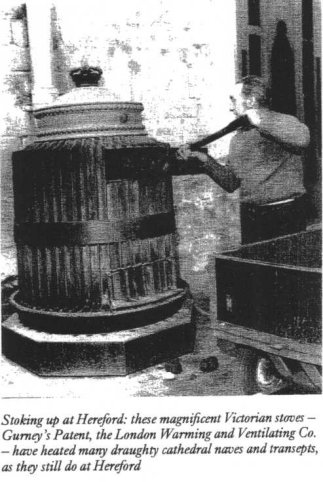
It was very cold in the cathedral, and even the formidable Gurney stoves in the aisles could barely offer local warmth. These great ribbed cylinders, each surmounted by a Queen Victoria-style crown, must be terrific gas-guzzlers, but they used to be coal-fired. I have a clear memory of being in the cathedral on a bleak and gloomy winter afternoon many years ago and seeing an aged verger pushing a trolley laden with buckets of anthracite from one Gurney to the next. It was like a moment from an M R James ghost story – ‘The Stalls of Barchester Cathedral’, perhaps, for which I suspect Ely was the setting. In the half-light, there was something sinister about the glow of the red-hot stoves. 


However long ago was that? I found myself murmuring a barely-remembered line of Horace: ‘Eheu fugaces, Postume, Postume’. To my surprise, I could recall the exact date: 1st January 1975 - thirty five years ago to the very day. What’s more, I could remember exactly why I was there. I had been attending a course at Madingley Hall (my first) which ran from 28th December over the New Year until 2nd January. On the last afternoon, one of the students announced she was going to drive over to Ely Cathedral, which she had never visited before, and asked if anyone would like to join her. In those days I had no car and was only too happy for the chance to re-visit the first intact medieval cathedral I’d ever seen.


(Why say ‘intact’? Why ‘medieval’? Because I was born in Birmingham: so the first cathedral I ever entered was St Philip’s, a fine Georgian building, and the first medieval cathedral in which I set foot was the ruined shell of Coventry. Then, when I was six, we moved from the Midlands to the Fens, and Ely in those pre-Beeching days was just a short train journey from Wisbech.)


The Madingley course was on Shakespeare’s late plays. It was run by John Andrew and Leo Salingar, and one of the guest lecturers was Richard Luckett, then a junior fellow at St Catharine’s College but for many years afterwards the Pepys Librarian at Magdalene.‡ He and I had been at the same school (St.John’s, Leatherhead) and in the same house. I reintroduced myself to him after his lecture and we kept in touch until we each had left Cambridge . Richard was a remarkable person,  one of those people one may not have  known well but whom one is grateful to have known at all.  


We were only a small group - not more than fifteen or so. Several of us were young teachers, but one student was the then recently retired Agnes Latham, shortly to publish her Arden Shakespeare As You Like It. For me it was a memorable course in every way. I would not have spent the most rewarding years of my career teaching in Cambridge for the University’s Institute of Continuing Education, if I hadn’t spent those six days at Madingley. And I remember the exhilaration of the classes, held in the Hickson Room. Leo Salingar, the distinguished scholar of Elizabethan and Jacobean drama, was developing his theory that Shakespeare’s profoundest insights were found in the comedies, not the tragedies. His book Shakespeare and the Traditions of Comedy  had just appeared in print and contained chapters elaborating the ideas he teased out with us on that course. 

He and John Andrew sparred cheerfully, Leo defending Cymbeline against John’s tongue-in-cheek charge that the play was almost unactable and all but unreadable. “Why should Shakespeare have sent poor Imogen all the way to Milford Haven, for goodness sake?” asked John. Leo, of course, had the answer. “Is there any scene in Shakespeare more absurd,” demanded John, “than the moment when the hapless Imogen wakes from her drugged sleep to discover a headless corpse beside her, which she promptly mistakes for her beloved Posthumus?” (It actually belongs to the treacherous Cloten.) “It doesn’t have to be absurd,” argued Leo: “act it and see.”


And we did. On New Year’s Eve, in the Saloon, we rehearsed and then acted scenes from the late plays. Anne, a drama teacher from Solihull, gave a performance as Imogen which won great applause, and no one laughed when she reached the lines:


O Posthumus, alas,

                        Where is thy head? Where’s that? (IV.ii.320-1)


People said Susan Fleetwood, playing Imogen that year for the RSC, could not have done better. My performance too was praised. I was the headless corpse.


Adrian Barlow


Illustrations: (i) Ely Cathedral, seen from the south east; (ii) Madingley Hall, home of the Institute of Continuing Education, University of Cambridge, Photos   © the author


*Translator’s notes: (i) I don’t believe in literal translation of poetry. Here I have picked up William Cowper’s echo of Horace in ‘The Poplar-Field’: ‘My fugitive years are all hasting away’. (ii) pietas of course means devotion to one’s friends, family, ancestors and country – as in ‘filial piety’ – rather than religious observance and behaviour.


‡Richard Luckett (1945-2020): summed up by The Times in its obituary of him (19.12. 20) as an ‘unworldly and whimsical Cambridge don, polymath and Pepys Librarian [….] One of the fabled dons of his time, Richard Luckett came to embody Magdalene College, Cambridge. His fund of recondite knowledge was a continual source of comedy and delight to all who knew him, but it also enabled him to enhance the fabric and collections of the college, its music, its reputation, and the scholarly endeavours of others in many disciplines.’


Monday, 5 April 2021

On unreliable memoirs

‘Never underestimate titles.” This was a mantra I repeated to students, young and old, many times throughout my teaching career. I used it particularly when talking about poetry, but it’s not the titles of poems alone that deserve our attention, and I’m intrigued by a new book by Marina Warner, reviewed recently in the Times Literary Supplement, Inventory of a Life Mislaid: An unreliable memoir. Both title and subtitle invite comment. 

In non-literary contexts, of course, the word inventory can suggest a long list of contents, often laboriously compiled. Whose heart has not sunk on arriving at a holiday cottage to find  an inventory of all the knives, forks and teaspoons, together with a warning about forfeiture of deposit if a single spoon is subsequently found to be missing? One prefers to be trusted.


So it’s a surprise to come across Marina Warner adding the subtitle ‘An unreliable memoir’ to warn readers that she herself is, well, not to be taken literally at least. The TLS reviewer, Ann Kennedy Smith, reminds us that ‘Warner’s books include novels and short stories as well as studies of female myths, iconography and fairy tales’. These suggest a preoccupation, not with the historical as such, but rather with the enduring and dangerous potency of myths. I remember that Warner’s 1994 Reith Lectures, Managing Monsters, were as challenging as they were entertaining: beginning with the myth of the She-Monster, she went on to examine the threads linking ancient heroic myths with modern male machismo. In the last lecture she dissected modern myths of national identity (‘Home: Our Famous Island Story’); post-Brexit, her words spoken then should surely haunt us now.


I like literary reviews to give me a clear sense of what a book is about, how it is shaped and what are its strengths and weaknesses. Whether or not I shall go on to read the books being discussed – and, of course, most of them I won’t – I want to finish reading a review feeling glad to know more about a book, a subject, an author than I did before. Ann Kennedy Smith makes clear her enjoyment of Warner’s ‘imaginative retellings’ and in a single sentence both points to a key theme of Inventory of a Life Mislaid and describes how the book works:


This is a wonderfully rich, partly mythical memoir that sifts through the past to connect a family’s secrets to the deep-rooted colonial assumptions that still resonate in a post-Brexit Britain.


‘Sifting through the past’; it’s from her excavation and selection of events, photographs, objects and memories that Marina Warner has reconstructed the story of her parents’ unlikely marriage. In doing so she has set out to reclaim for her mother, Ilia, the identity she buried when, as a young and penniless Italian wartime bride, she married a much older ex-Etonian army officer with a colonial self-assurance quite unadapted to the post-war era of Imperial retreat. From the TLS review, one learns that Marina Warner’s book ‘unfurls at an unhurried pace, and embedded in the text are lengthy digressions, some previously published as essays in the London Review of Books’. This sounds a cautionary note, but one partly muted by the reviewer’s concession that, ‘If occasionally these asides slow down the narrative pace, they are never dull.’


A memoir, strictly speaking, is history and/or biography written from personal experience. There must always be a subjective element to such a book, sometimes explicitly defined by its title –Winston Churchill as I Knew Him (1966), for example, published a year after Churchill’s death by his long-standing friend, Violet Bonham-Carter. You wouldn’t expect a memoir often described as ‘an affectionate portrait’ to be as objective as an historical biography. 


But memoirs should be distinguished by something more than subjectivity.  The author Alison Light, whose book A Radical Romance: A memoir of love, grief and consolation, won the 2020 PEN Ackerley award for literary autobiography, just recently reflected on the experience of writing memoir. It gave her, she says,


…room to reflect on earlier selves and on the on-going illusion of being a self. Memoir is often closer to reveries and dream, evoking the lyrical rhythms of poetry rather than prose. As it moves through different kinds of time and ‘times out of time’ – falling in love, illness, mourning – narrative or plot gives way to images and scenes. I had the sense of halting, even defeating, time.


This account surely gestures towards a kind of poetics of memoir writing, marking out a territory quite different from the characteristically linear landscape of history. It suggests to me that if a memoir is ‘unreliable’, this isn’t because it is untruthful or inaccurate but because its ambitions and literary resources are essentially different.


I can think of some eminent historians who would have no truck with my tentative distinction, but one historian who articulated something similar, based on his own experience of writing both history and memoir, was Richard Cobb (1917-1996). After a distinguished career largely centred on the French Revolution, he began in later life to publish a number of memoirs. Introducing A Classical Education (1985) he admitted:


This is a very personal account, written from my own memories, such as they are, and often embellished by my own imagination. I have not aimed at absolute accuracy, being more concerned with readability; this is not a historical narrative, and I am not always sure at what stages fictional inventiveness takes over from the chronicle of memory.


Such honesty is disarming – reassuring, too, for anyone who (like me) has spent time during this past year of lockdowns trying to put onto paper memories and impressions of their own life. Truth is, we are all unreliable narrators and might as well admit it at the outset. Let Jane Austen, writing in Emma:, have the last word: ‘Seldom, very seldom, does complete truth belong to any human disclosure; seldom can it happen that something is not a little disguised, or a little mistaken.’


Adrian Barlow


Sources:

Marina Warner, Inventory of a Life Mislaid: An unreliable memoir, (2021)

Ann Kennedy Smith, ‘Planted in Foreign Soil’ (review), Times Literary Supplement (26 March, 2021), p.20

Alison Light, ‘A Radical Romance’ (discussion of her memoir A Radical Romance: A memoir of love, grief and consolation (2019) in 9 West Road, University of Cambridge Faculty of English alumni magazine (March 2021) p.16